The Ultimate Kitchen & Pantry Organization System That Actually Works
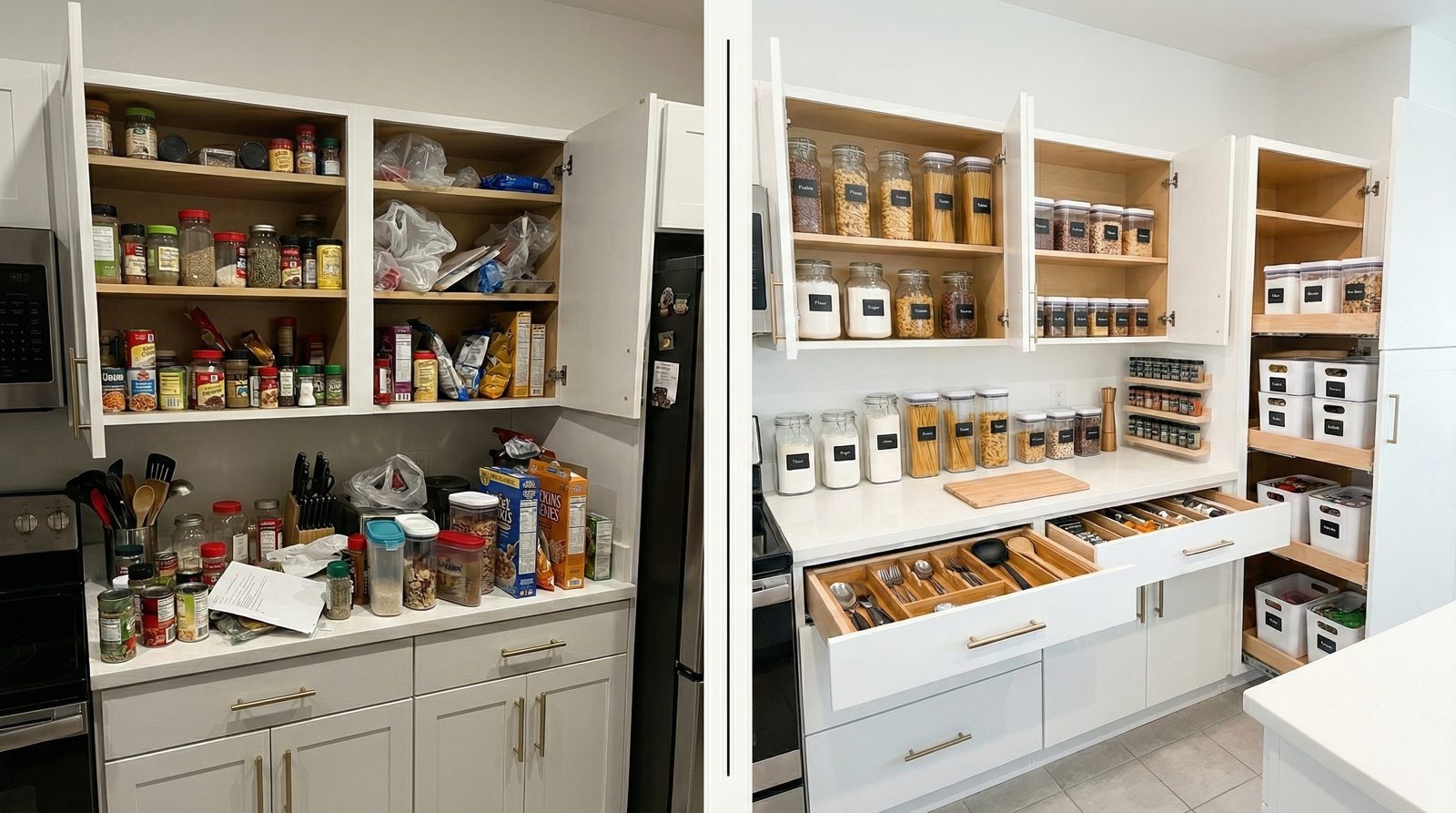
Open your pantry right now. Can you see every single item? Do you know exactly what you have? Or are there cans hiding behind cans, expired spices you forgot about, and bags of chips clips that have fallen into a black hole?
If that sounds familiar, you're not alone. The kitchen and pantry are the most-used spaces in any Los Angeles home, and they're also the fastest to fall into disarray. But here's what most organization advice gets wrong: the solution isn't buying more containers. It's building a system around how you actually cook.
The Container Myth
Let's address the elephant in the room. Instagram and Pinterest are full of pantries with matching glass jars, uniform labels, and aesthetically perfect rows. It looks amazing. It's also completely impractical for most people.
Transferring cereal, pasta, and flour into decorative containers adds a step to your routine. You have to remember what's inside, track expiration dates separately, and refill containers constantly. For most busy families, this system breaks down within weeks.
The professional approach: Use containers strategically, not universally. Decant items you buy in bulk (rice, oats, nuts). Keep everything else in original packaging but organized by category in bins or on trays. The goal is visibility and access, not aesthetics.
The Zone System: How Professional Kitchens Work
Professional restaurant kitchens are organized into stations. Every chef has everything they need within arm's reach. Your home kitchen should work the same way.
Zone 1: Cooking Zone
Everything within arm's reach of your stove: oils, salt, pepper, frequently used spices, cooking utensils, pots, and pans. You shouldn't have to walk across the kitchen for olive oil while something is sizzling on the stove.
Zone 2: Prep Zone
Near your main counter space: cutting boards, knives, mixing bowls, measuring cups, and commonly used ingredients. This is where most of the actual work happens.
Zone 3: Baking Zone
If you bake, group flour, sugar, baking powder, vanilla, mixing equipment, and baking sheets together. They can live in a less accessible cabinet since baking is less frequent than daily cooking.
Zone 4: Morning Zone
Near your coffee maker: mugs, coffee, tea, cereal, breakfast items, kids' lunch supplies. The morning rush shouldn't require opening ten different cabinets.
Zone 5: Storage Zone
Pantry and deep storage for bulk items, backstock, and rarely used appliances. This is where vertical shelf organizers and lazy Susans earn their keep.
Pantry Organization: The FIFO Method
FIFO stands for "First In, First Out" — another trick from restaurant kitchens. When you buy new groceries, put them behind existing items. This way, older items get used first and nothing expires in the back of the shelf.
To make FIFO work:
- Use shelf risers so you can see items in the back row
- Group similar items together (all canned goods, all pasta, all snacks)
- Keep a running grocery list on the pantry door or in a phone app
- Do a 5-minute pantry scan before grocery shopping
The Fridge: The Forgotten Zone
Your refrigerator is part of your kitchen organization system too. Use clear bins to group items: one for dairy, one for deli meats, one for condiments. Dedicate one shelf to leftovers and meal prep. Keep fruits and vegetables in designated drawers, not scattered across shelves.
The best kitchen organization isn't the prettiest one — it's the one where you can cook dinner without thinking about where anything is. When your hands know where to reach, cooking becomes meditation, not frustration.
Under the Sink: The Danger Zone
Under the kitchen sink is where cleaning supplies go to create chaos. The solution is simple: one tension rod for hanging spray bottles, one small shelf riser for stacking, and a turntable (lazy Susan) for products in the back. Done. Five minutes, total transformation.
Maintaining Your Kitchen System
The kitchen is a high-traffic space. Unlike a closet that you access twice a day, the kitchen gets used 5-10 times daily. Any system needs to account for this.
- The 2-minute rule: If putting something away takes less than 2 minutes, do it now. Not later. Now.
- Weekly reset: Spend 10 minutes every Sunday wiping shelves and putting misplaced items back in their zones.
- Monthly check: Scan for expired items and adjust your system if something isn't working.
- Seasonal purge: Every 3 months, check for appliances and utensils you haven't used. Donate what you don't need.
When to Bring in a Professional
Kitchen and pantry organization is one of the highest-impact spaces to get right. It affects your daily routine, your grocery spending (no more buying duplicates), and even what you eat (when healthy food is visible and accessible, you eat better).
If your kitchen needs a complete reset, our Starter package covers one space in a single 4-hour session for $500. For families who want the kitchen organized alongside their pantry, closet, and other spaces, our Complete package covers 5 spaces over 5 days for $2,000.
Transform your kitchen in one day
Professional kitchen organization that actually sticks — designed around how you cook.
Get a Free ConsultationThe best part about an organized kitchen? You'll spend less at the grocery store, waste less food, and actually enjoy cooking again. For most Los Angeles families, that's a return on investment that pays for itself within months.